Folsom's HOA Sellers Are Watching the Wrong Clock
September 10, 2026
September 10, 2026
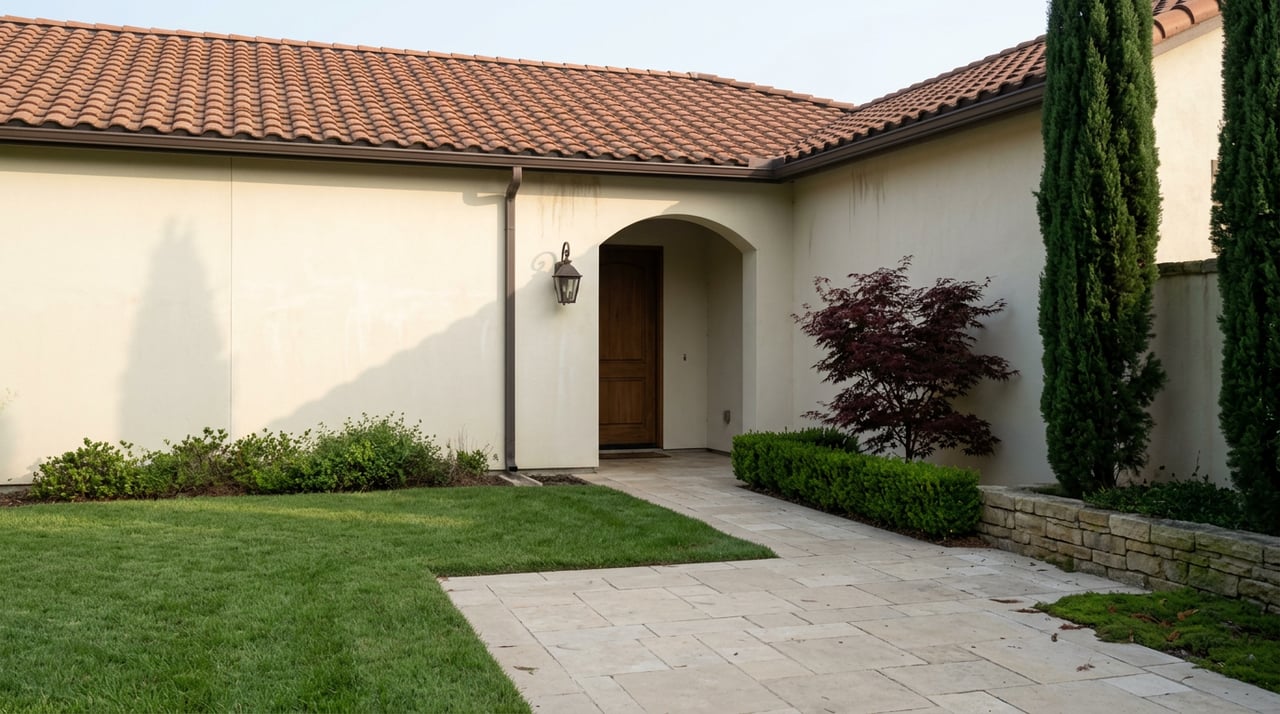
Picture a seller in one of Folsom's master-planned communities, maybe a golf-course lot in Empire Ranch or a shaded street in Broadstone, who has just accepted an offer. The inspection is scheduled. The lender is underwriting. The seller checks off the HOA paperwork as a formality, something the title company will handle in the background while the real work of escrow moves forward. Three weeks later, the buyer's agent calls asking for an extension. Nobody did anything wrong. The paperwork just started too late.
That scenario plays out often enough in California's HOA-governed neighborhoods that it has a name among title and escrow professionals: the resale certificate got ordered on time, but not early enough to matter. In Folsom, where communities like Empire Ranch, Broadstone, The Parkway, and Canyon Falls Village all carry HOA governance on top of the usual purchase contract timeline, this is the friction point that catches sellers off guard more than any inspection finding or appraisal gap.
California Civil Code section 4530 gives a homeowners association ten days to deliver the resale certificate and disclosure packet once someone requests it. That ten-day window is the number most sellers hear about, and it sounds generous. What it does not include is when the request gets made.
The buyer's side of the transaction runs on a different clock. According to HOA Notes, the standard California Residential Purchase Agreement gives buyers a default investigation contingency of seventeen days, the window during which they can review disclosures, inspect the property. California does not give buyers a separate statutory right to cancel tied specifically to the HOA documents, the way some states do. Whatever protection a buyer has comes entirely from that seventeen-day contract window.
Those two clocks do not run in sequence. They run at the same time. If a seller's agent waits until day ten of escrow to request the HOA packet, and the association takes its full ten days to respond, the buyer receives the documents on day twenty, after the standard contingency period has already closed. If the request goes out on day one instead, the buyer has time to actually read the governing documents, budget, and meeting minutes while their cancellation rights are still active.
The ten-day rule is not the deadline that decides whether a Folsom closing stays on schedule. The seventeen-day rule is, and it only works in the buyer's favor if the HOA request goes out immediately.
Under section 4525, a seller in any California common interest development owes the buyer a specific set of documents: the governing CC&Rs and bylaws, the current budget, an assessment and reserve funding disclosure summary, the last twelve months of board meeting minutes, and a reviewed financial statement if the association's gross income exceeds $75,000 a year. For communities with a history of construction defect claims, the packet also includes the initial list of defects and any settlement information.
None of that is boilerplate in Folsom's larger communities. Empire Ranch homes, most built between 2000 and 2005, commonly carry Mello-Roos assessments layered on top of HOA dues that can run from clubhouse access to basic gate and signage upkeep, and a buyer reading the reserve funding summary needs time to understand what those numbers mean for a thirty-year hold, not a three-day skim. Broadstone, built out mostly between 1997 and 2005 with homes ranging from roughly 1,300 to 2,000 square feet, has its own budget and minutes that a buyer should actually read rather than initial past. The Parkway operates around a private security arrangement and front landscape maintenance funded through its HOA, details that live in the same packet.
As of January 1, 2026, a state law known as SB 410 added a new required document to that packet: the association's most recent exterior elevated element inspection report, covering balconies, decks, and walkways, under Civil Code section 5551. It is a real addition to the disclosure list and it is easy to hear about and assume it applies everywhere.
It does not. The section 5551 inspection requirement applies specifically to buildings with three or more attached multifamily dwelling units, the kind of construction found in condominium and stacked-flat developments. Folsom's signature golf-course neighborhoods, the ones built around Empire Ranch's course and the ones threading through Broadstone and Canyon Falls Village, are overwhelmingly detached single-family product. For most buyers and sellers moving through those communities, the new balcony inspection line item will not apply at all. It matters for Folsom's attached-unit HOAs, and sellers there should confirm with their association whether a current report is on file before escrow opens, since a missing report is one more document that has to be produced inside the same compressed window.
The lesson is not that the new law is a bigger deal than the old timing problem. It is closer to the opposite. The disclosure list keeps growing, but the mechanism that actually threatens a closing date in Folsom, the gap between when the HOA is asked and when the buyer's contingency runs out, has been sitting in the code for years and applies to every HOA sale in the city regardless of what kind of building sits on the lot.
California resale certificates are not cheap by national standards. Industry cost surveys put California and New York at the top of the country, with certificate fees commonly running $250 to $500 and total package costs reaching $700 or more once transfer fees and portal charges are added. Section 4530 limits what an association can charge to its actual cost of preparing and delivering the documents, itemized on a standard fee disclosure form, and an association cannot tack on an extra charge for providing paper copies instead of electronic ones.
Turnaround speed depends heavily on how the association is managed. A community with a responsive professional management company can often produce the full packet in three to five business days. A self-managed association, or one that routes requests through an unfamiliar online portal for the first time, can stretch that same request past two or three weeks. Folsom's HOA landscape includes both kinds, and a seller's agent who has not worked with a particular community's management company before should build in extra time on the front end rather than assume a standard turnaround.
The fix here is not complicated, but it depends entirely on timing that most people treat as an afterthought.
None of this changes what the law requires. It changes whether the buyer actually has time to use the protections the law gives them, and whether a Folsom closing holds its date.
Does every home in an HOA community need the same disclosures? The core packet under section 4525 applies to any home in a California common interest development regardless of whether it is attached or detached. The newer exterior elevated element inspection report only applies to buildings with three or more attached units.
Who pays for the resale certificate in Folsom? Local custom in most California transactions has the seller cover this cost as part of closing expenses, though the purchase contract can assign it differently, and any ambiguity is usually resolved between the two agents before it becomes a dispute.
Folsom's HOA communities offer genuine advantages, from Empire Ranch's course and trail network to Broadstone's walkable proximity to shops and The Parkway's managed open space. None of that changes the mechanics of getting a sale to the closing table on schedule. If you are preparing to sell or buy in one of these communities and want a clear read on how the timeline will actually run for your specific HOA, Kacey Wake can walk through it with you before escrow opens, not after the clock has already started. Let's Connect.
This article is general information, not legal, tax or financial advice. Consult a qualified professional about your situation.
Stay up to date on the latest real estate trends.
Whether you're buying, selling, or investing, Kacey provides personalized guidance, market expertise, and dedicated support to help you achieve your real estate goals with confidence.
Kacey Wake| CA DRE# 01429348
Compass California II, Inc. | CA DRE# 01527235
[email protected]
(916) 671-0233
2999 Douglas Blvd Ste 140 Roseville, CA 99691