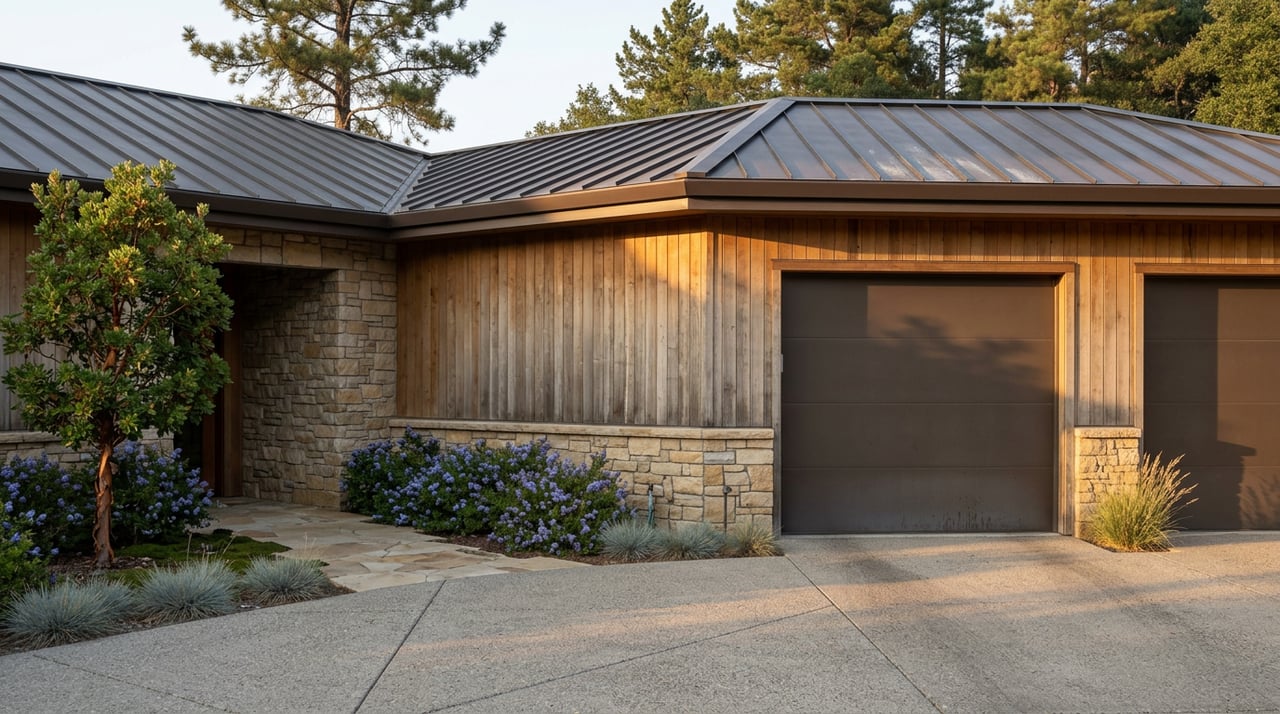
El Dorado Hills Homes at the Same Price Don't Cost the Same Every Month
August 13, 2026
August 13, 2026
Two buyers walk into escrow on the same week this summer, both closing on El Dorado Hills homes priced at $875,000. Same square footage, same four bedrooms, same granite countertop era. One of them gets a loan estimate with an extra $280 a month buried in the impound account. The other doesn't. Neither buyer saw it coming, because nothing about the listing price told them to look.
That gap has a name: Mello-Roos. And in El Dorado Hills, where new construction and legacy neighborhoods sit block to block, it is the single biggest reason two homes that look identical on a spreadsheet land at very different real costs once escrow closes.
Bay Area buyers arrive here comparing price per square foot the way they learned to in Marin or the Peninsula. That instinct makes sense in a market where the tax structure is uniform. It backfires in El Dorado Hills, where a Community Facilities District, commonly called Mello-Roos, can sit on top of the base 1% property tax in one neighborhood and be entirely absent two miles away.
Mello-Roos isn't a fee the seller controls or the price reflects. It's a special tax tied to the parcel, created decades ago as a workaround to Proposition 13's limits on how fast local governments could raise revenue for roads, schools, and parks in newly developing areas. The tax gets attached to the land, not the sale price, which means a $875,000 home in one CFD can carry a materially different monthly obligation than a $875,000 home in another, even though both listings show the identical number at the top of the page.
Mello-Roos shows up as its own line item, separate from your base property tax and separate from any HOA dues. It's disclosed to buyers, but disclosure happens at different points in the transaction depending on who's selling and how organized the paperwork is. Here's what to actually pull before you write an offer:
None of this is exotic. It just has to happen before you're emotionally attached to a specific house, not during the appraisal contingency.
El Dorado Hills isn't one tax environment. It's a patchwork, and the pattern follows when a neighborhood was built more than it follows price.
| Area | Mello-Roos status | Why it matters |
|---|---|---|
| Homes built before the early 1990s | Generally none | Older sections of El Dorado Hills predate most CFD formation and typically carry no special tax at all |
| The Summit | No CFD | A named exception among the community's gated neighborhoods, most of which do carry one |
| Serrano | Varies by phase | A large master-planned community where different phases were built under different CFDs, so two homes on the same street can carry different obligations |
| Bass Lake Hills Specific Plan (Bell Ranch, Hawkview) | Active CFD 2018-01, formed September 18, 2018 | Funds ongoing maintenance of parks and facilities within that specific plan area, with future phases annexed in as they're entitled |
| Carson Creek Village | Active CFD #11 2024-1 | One of the more recently formed districts on the county's active list, a reminder that new construction keeps adding fresh CFDs rather than retiring old ones |
The El Dorado Hills Community Services District maintains an active list of these facilities districts, and in the Bass Lake Hills Specific Plan specifically, the district's own filings note that future developments within the plan area get annexed into CFD 2018-01 as they receive their entitlements. That means the tax environment in a still-developing pocket isn't fixed even at the neighborhood level. Two houses in the same specific plan area, built a few years apart, can land under different terms of the same district.
The dollar range is wide by design. Statewide guidance on Mello-Roos in 2025 and 2026 puts typical annual amounts anywhere from around $360 in older, smaller districts to more than $10,000 in newer, high-growth developments, with combined effective property tax rates in CFD-heavy areas reaching 1.5% to 1.7% of purchase price compared to 1.1% to 1.3% in areas without one. On a $875,000 home, that difference alone is the gap between roughly $9,600 and $14,900 a year in property tax exposure before you've spent a dollar on the mortgage.
There's a second layer to this, and it compounds the first. If you've been watching El Dorado Hills from the Bay Area this year, you've probably seen headlines about the median home price dropping sharply. The first-half 2026 figures for ZIP 95762 show a median sale price around $875,000, down roughly 11% from the same period a year earlier.
Read that on its own and it looks like the market softened. It didn't. Over the same window, price per square foot actually rose about 1.7% to roughly $386, and closed sales volume climbed nearly 10%. What happened is a mix shift, not a value decline. More sales landed in the $800,000 to $1.2 million range this year, which pulls the median down mechanically even while the underlying value of comparable homes held or improved.
This is exactly why comparing El Dorado Hills neighborhoods by price alone misleads twice over. The median tells you what sold, not what a specific home is worth. And even within a single price band, the CFD stack underneath two otherwise comparable homes can differ by thousands of dollars a year. A buyer chasing the "deal" implied by a falling median, without checking which facilities district a specific parcel sits in, can end up paying more every month than the sticker price ever suggested.
There's a practical upside buried in this. One local market report tracking the May-to-June 2026 transition found that days on market rose 9 days, compared with a seven-year average increase of about 3 days for that same seasonal window, and months of supply climbed 0.9 months against a seven-year average that typically sits at essentially flat. Inventory was building, and pending contracts were slowing, well beyond what a normal end-of-school-year lull tends to produce.
For a Bay Area buyer, that matters less as a signal to wait and more as leverage to ask. A market with more breathing room is a market where you can reasonably request the CFD disclosure, the current tax bill, and the district's Rate and Method of Apportionment before removing contingencies, rather than discovering the number at underwriting. Sellers in a more balanced market are less likely to treat that request as an inconvenience.
Stop comparing list prices and start comparing all-in monthly numbers. That means base property tax, any Mello-Roos special tax, HOA dues, and the mortgage payment together, not the sale price alone. A home priced $30,000 higher with no CFD can easily cost less per month than a "cheaper" new-construction home in an active district, especially once you factor in that the maximum special tax rate on most CFDs, per the El Dorado Hills CSD's own explanation of how these districts are structured, typically has an annual inflation adjustment built in, so the ceiling on what a parcel could owe tends to rise over time even if the current levy holds steady.
If you're relocating from the Bay Area and comparing El Dorado Hills against Folsom, Granite Bay, or Roseville, this same exercise applies everywhere new construction has expanded in the past decade. The special tax isn't unique to one community. What's unique is knowing, parcel by parcel, which side of the line a specific house falls on before you're three weeks into escrow.
Does Mello-Roos ever go away? It depends on the district. Some CFDs are formed to repay a specific bond, and the special tax retires once that bond is paid off. Others, as the El Dorado Hills CSD explains on its own CFD page, are maintenance CFDs that fund ongoing services like landscaping and street lighting, and property owners are taxed for as long as those services continue, with no fixed end date tied to a bond schedule.
Can I negotiate the price down to offset a high special tax? You can try, and in a market with more inventory and longer days on market than usual, sellers may be more open to it than they were two years ago. But the special tax itself doesn't change with negotiation. It's a fixed obligation tied to the land, not a term of the sale.
Will this affect my loan approval? Lenders typically include the annual special tax in your total monthly housing expense, the same way they treat HOA dues, which means it factors into your debt-to-income ratio. It rarely blocks financing outright, but it can change how much home you qualify for once it's added to the calculation.
None of this is a reason to avoid El Dorado Hills. It's a reason to ask sharper questions before you fall for a floor plan. The neighborhoods that carry no special tax and the ones layered with two or three overlapping districts sit on the same map, sometimes on the same street, and the only way to know which one you're looking at is to pull the parcel record before you write the offer, not after.
If you're comparing El Dorado Hills against other Placer and Sacramento communities and want someone to run the real numbers on specific homes before you fall in love with one, Kacey Wake has spent 22 years walking Bay Area relocators through exactly this kind of comparison. Let's Connect.
Stay up to date on the latest real estate trends.

Whether you're buying, selling, or investing, Kacey provides personalized guidance, market expertise, and dedicated support to help you achieve your real estate goals with confidence.
Kacey Wake| CA DRE# 01429348
Compass California II, Inc. | CA DRE# 01527235
[email protected]
(916) 671-0233
2999 Douglas Blvd Ste 140 Roseville, CA 99691